Texas · Auto insurance
What Car Insurance Is Required in Texas? The 30/60/25 Rule Explained
The law asks for one thing: liability insurance at 30/60/25 or higher. Here is what those three numbers pay, what they never pay, and how to prove you have them.

In short
Texas requires every driver to carry liability insurance of at least $30,000 for injuries to one person, $60,000 for injuries to everyone in one crash and $25,000 for property damage. This is written as 30/60/25. It pays only for harm you cause to other people. It does not repair your car or pay your medical bills, and you must be able to show proof of it on request.
- The Texas minimum is liability coverage of $30,000 per injured person, $60,000 per crash and $25,000 for property damage.
- Liability pays the other side when you are at fault. It pays nothing for your own car or your own injuries.
- Insurers must also offer personal injury protection and uninsured motorist coverage, and you can only turn them down in writing.
- You can show proof on paper or on your phone, and the state also checks coverage through the TexasSure database.
- A first conviction for driving uninsured carries a fine of $175 to $350, and it rises to $350 to $1,000 after that.
In this article
- What car insurance does Texas law actually require?
- What does each number in 30/60/25 pay for?
- What does the Texas minimum leave out?
- How much does the Texas minimum actually pay in a real crash?
- What proof of insurance do you have to carry?
- How does the state know whether you are insured?
- What happens if you drive without the required coverage?
- Is the minimum enough for you?
If you drive in Texas, the law requires you to carry liability insurance of at least 30/60/25. That coverage pays other people when you cause a crash, up to three fixed dollar limits. It pays nothing toward your own car or your own injuries, which is the part that surprises most drivers.
What car insurance does Texas law actually require?
Texas calls it financial responsibility. Under the Texas Transportation Code, you may not operate a motor vehicle in the state unless you can pay for the damage you cause, and almost everyone meets that rule with a liability insurance policy.
The minimum amounts have been the same since January 1, 2011: $30,000 for bodily injury to one person, $60,000 for bodily injury to two or more people in one crash, and $25,000 for damage to other people's property. Agents and insurers shorten this to 30/60/25.
Only liability is required by the state. Everything else on an auto insurance policy, from collision to towing, is a choice you make or a condition your lender sets.
What does each number in 30/60/25 pay for?
Each number is a ceiling for one kind of harm in one crash. Your insurer pays up to that ceiling and stops.
The three Texas minimum limits and what each one covers
| Number | Legal minimum | What it pays | Who receives the money |
|---|---|---|---|
| 30 | $30,000 | Injuries to, or the death of, one person | Each person you hurt, up to this cap |
| 60 | $60,000 | Injuries to everyone hurt in the same crash | All injured people combined |
| 25 | $25,000 | Damage to cars and other property | Owners of the vehicles, fences, buildings or signs you damage |
What this means for you: the first number limits what any single injured person can receive, no matter how high the second number is. The third number has to stretch across every vehicle and object you hit in that one crash.
Two details are easy to miss. The $60,000 is not $60,000 per person. And the $25,000 is shared, so if you push one car into another on the Bush Turnpike, both owners draw from the same $25,000.
If terms like bodily injury and property damage are new to you, the insurance glossary explains them in plain words.
What does the Texas minimum leave out?
A minimum policy protects other people from you. It does not protect you from much of anything, and that gap is where the costly surprises sit.
What a state-minimum policy does and does not include
| Coverage | Required by Texas law? | What it pays | In a minimum policy? |
|---|---|---|---|
| Liability (30/60/25) | Yes | Other people's injuries and property when you are at fault | Yes |
| Personal injury protection (PIP) | Must be offered, can be rejected in writing | Your and your passengers' medical bills and some lost income | Only if you did not reject it |
| Uninsured/underinsured motorist | Must be offered, can be rejected in writing | Your injuries and car when the at-fault driver has no or too little insurance | Only if you did not reject it |
| Collision | No, unless a lender requires it | Repairs to your car after a crash | No |
| Comprehensive | No, unless a lender requires it | Hail, theft, fire, flood, vandalism | No |
| Towing and rental reimbursement | No | A tow, or a rental car while yours is repaired | No |
What this means for you: if you bought the cheapest policy you could find, look at your declarations page for PIP and uninsured motorist. Texas insurers have to include both unless a named insured rejected them in writing, and a low-priced policy may have been sold with both rejected.
Those two coverages deserve their own decision. See whether uninsured motorist coverage is worth it in Texas and how PIP and medical payments coverage differ before you sign a rejection form.
If you still owe money on the car, the Texas Department of Insurance notes that your lender will require collision and comprehensive. The comparison of full coverage and liability-only insurance shows what that adds.
How much does the Texas minimum actually pay in a real crash?
Here is an example with round numbers. It is an illustration, not a prediction of any claim.
You are heading south on I-35E near Lewisville in stop-and-go traffic. You look down for a second and hit a late-model SUV, which is pushed into the guardrail and declared a total loss. The driver and a passenger are taken to the hospital.
- The SUV is worth $42,000. Your property damage limit is $25,000. Your insurer pays $25,000 and $17,000 remains.
- The driver's medical bills come to $45,000. Your per-person limit is $30,000. Your insurer pays $30,000 and $15,000 remains.
- The passenger's bills come to $20,000. That is under the per-person limit, and the two injuries together stay under $60,000, so your insurer pays all $20,000.
Your policy paid $75,000 in total. You are still personally responsible for $32,000, and your own car is not covered at all because liability never pays for it.
The Texas Department of Insurance warns about this in its auto insurance guide: the minimum may not be enough if several cars are involved or the other car is totaled, and if your coverage runs out you may have to pay the rest out of pocket and could be sued. For a way to choose limits that fit your income and savings, read how much car insurance you really need in Texas.
What proof of insurance do you have to carry?
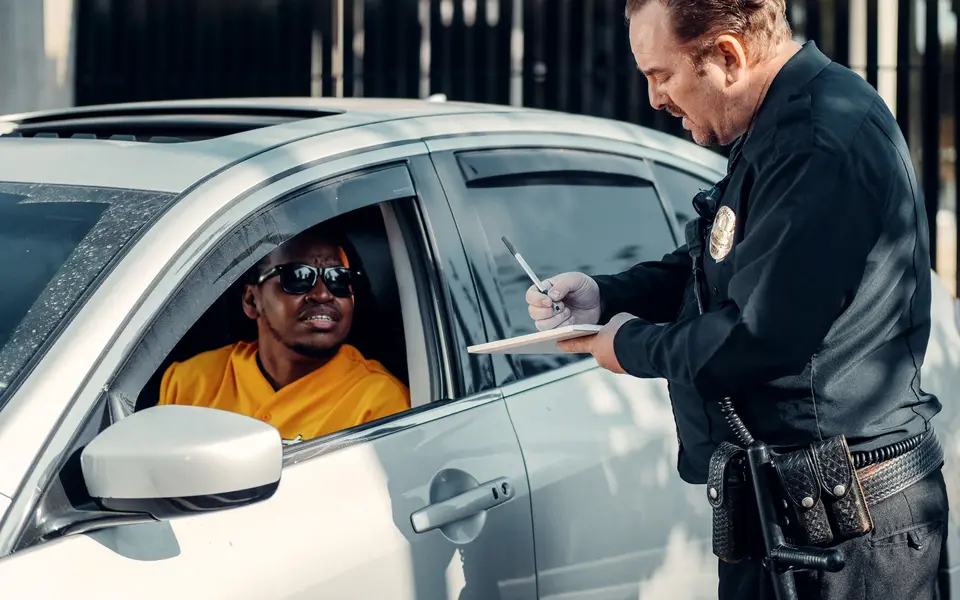
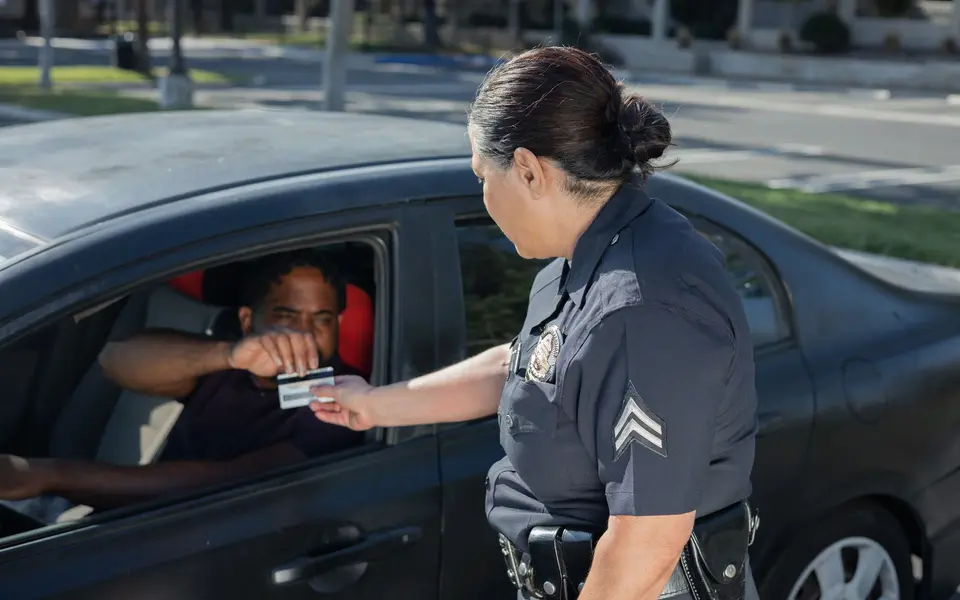
You must show evidence of financial responsibility when a peace officer asks for it, and also to anyone involved in a collision with you. Texas law accepts several forms:
- The standard proof of insurance card issued by your insurer.
- An image of that information displayed on your phone or another wireless device.
- The liability policy itself, or a photocopy of it.
- An insurance binder that confirms you are covered.
- A certificate for one of the rare alternatives, such as a surety bond, a deposit or self-insurance.
The standard card has to list the insurer's name, the policy number, the policy period, the name and address of each insured, the make and model of each covered vehicle, and either the policy limits or a statement that the coverage meets the state minimum. When a new card arrives, check that the vehicle on the card matches the vehicle you drive.
You will also be asked for proof of current liability insurance when you renew your vehicle registration, according to the Texas Department of Motor Vehicles.
How does the state know whether you are insured?
Texas does not rely on the card alone. Insurance companies report the policies they issue to TexasSure, a verification program run jointly by the Texas Department of Insurance, the Department of Public Safety, the Department of Motor Vehicles and the Department of Information Resources.
Law enforcement and vehicle registration offices can look up a Texas-registered vehicle and see whether a policy is matched to it. An officer has to try that check before writing a no-insurance citation. If the database shows coverage, you are not presumed to be uninsured just because you could not find your card.
The match runs on your vehicle identification number. TexasSure advises drivers to check that the VIN on the policy matches the VIN on the registration and to call the insurer if it does not. A single wrong digit can make an insured car look uninsured.
The same database shows how common the problem is. The Texas Department of Motor Vehicles reports that an estimated 11.87 percent of Texas drivers were uninsured as of September 2025.
What happens if you drive without the required coverage?
Driving without financial responsibility is a misdemeanor under the Transportation Code. A first conviction carries a fine of $175 to $350. If you have a prior conviction, the fine is $350 to $1,000.
After a second conviction, the Department of Public Safety must suspend your driver's license unless you file and maintain evidence of financial responsibility for two years from that conviction. The court must also order the vehicle impounded if you owned it at the time of the offense and still own it, and the law sets the impoundment at 180 days.
It is a defense if you had valid coverage on the date of the stop and show the court proof of it. The fines are only part of the cost, though. The full picture, including what happens after an uninsured crash, is in what happens if you drive without insurance in Texas, and the filing itself is explained in SR-22 insurance in Texas. A missed payment can put you in the same position without your noticing, which is why a lapse in car insurance deserves quick action.
Is the minimum enough for you?
The minimum is the least the state will accept, and it was not designed around your household. Use this checklist to see where you stand.
- You own a home, have savings or earn a steady paycheck that a judgment could reach.
- You drive daily on busy roads such as US-75, I-35E or State Highway 121, where traffic is heavy and one mistake can involve several vehicles.
- You carry passengers often, including children or coworkers.
- You have a teen or another new driver in the household.
- You could not comfortably write a check for $15,000 to $30,000 after a crash.
If two or more of these describe you, the minimum is probably too thin, and you should price higher limits on your car insurance policy before your next renewal. Drivers with a home and savings to protect sometimes add an umbrella policy over their auto and home insurance for an extra layer of liability coverage.
If none of them describe you and money is tight, a minimum policy is still far better than no policy. Keep PIP and uninsured motorist coverage if you can, since they are the parts that pay for your side.
How Assured Insurance Group helps
Assured Insurance Group helps drivers in Flower Mound, Plano, Garland and across Dallas–Fort Worth with auto insurance. We will walk through your current policy with you, line by line, so you can see which limits you carry, which coverages were rejected and what your options are. You can call, email [email protected] or stop by the Flower Mound office. To start, request a quote or call 214-222-5234.
Questions people ask next
Does the Texas minimum cover my own car if I cause a crash?
No. Liability insurance pays for the other driver's car, other property you damage and other people's medical bills. To repair or replace your own car after a crash you cause, you need collision coverage. Damage from hail, theft, fire or flood falls under comprehensive coverage. Both are optional under Texas law, but a lender will require them if you have a loan or lease.
Can I show proof of insurance on my phone in Texas?
Yes. Texas law lets you show an image on a wireless device that contains the same information as the standard proof of insurance card issued by your insurer. Showing the image does not give an officer consent to look at anything else on your phone. Keeping a paper card in the glove box is still a sensible backup if your battery is dead.
Is 30/60/25 enough if I only drive a few miles a day?
The law treats a short commute the same as a long one, and so does a crash. A newer pickup or SUV can cost more than the $25,000 property limit to replace, and one person's hospital bills can pass the $30,000 injury limit. If the damage is higher than your limits, you may have to pay the rest yourself and you could be sued for it.
Does my Texas liability insurance work in other states and in Mexico?
Texas law requires an owner's policy to pay for covered liability from driving anywhere in the United States or Canada. Mexico is different. The Texas Department of Insurance says Mexico does not recognize American auto liability policies, so you would need a separate Mexican liability policy before you cross the border.
Do I need insurance on an old car that I rarely drive?
If you drive it on a public road, yes. Texas law has a narrow exception for a vehicle at least 25 years old that is used only for exhibitions, club activities and parades and not for regular transportation, and the owner has to file an affidavit with the Department of Public Safety. An ordinary older car that you drive now and then needs liability coverage.
Are there ways to meet the Texas requirement without buying a policy?
The law lists a few, and they are rarely practical. They include a surety bond, a $55,000 deposit of cash or securities with the state comptroller, a $55,000 deposit with the county judge, or a self-insurance certificate for a person with more than 25 registered vehicles. For nearly every household, a liability policy is the realistic route.
Sources and further reading
- Texas Transportation Code, Chapter 601: Motor Vehicle Safety Responsibility Act
- Texas Department of Insurance: Auto insurance guide
- Texas Insurance Code, Chapter 1952: required offers of uninsured motorist and personal injury protection coverage
- Office of Public Insurance Counsel: Auto insurance, the basics
- Texas Department of Motor Vehicles: TexasSure insurance verification
- TexasSure: vehicle insurance verification program
General information for Texas readers, current as of November 2026. It is not legal, tax or insurance advice. Your coverage depends on the wording of your own policy.
More auto insurance guides
- Is Uninsured Motorist Coverage Worth It in Texas?
- PIP vs. Medical Payments Coverage in Texas: What Is the Difference?
- Why Did My Car Insurance Go Up in Texas When I Had No Claims?
- How to Lower Your Car Insurance in Dallas–Fort Worth Without Gutting Your Coverage
- Adding a Teen Driver to Your Car Insurance in Texas: What Parents Should Know
- What to Do After a Car Accident in Texas: Steps, Reports and Your Claim