Texas · Auto insurance
Why Did My Car Insurance Go Up in Texas When I Had No Claims?
A clean record does not freeze your price. Here is how Texas auto rates are set, the two kinds of reasons a renewal goes up, and the questions that get you a straight answer.


In short
Your Texas car insurance can go up without a claim for two kinds of reasons. Either the company raised its rates for everyone like you, because repairs, parts, crashes and storm losses cost more, or something in your own profile changed: your address, car, drivers, mileage, credit or a lost discount. The Texas Department of Insurance does not set the price. Ask your company which factor moved, then compare quotes.
- The Texas Department of Insurance does not set auto rates. Companies file their own rates and may use them the day they file.
- A renewal can rise because the company’s rate went up, because your own rating factors changed, or both.
- Inflation in parts and repairs, riskier driving, Texas weather and reinsurance costs push rates up for everyone.
- A company may not raise your premium only because you called with a question or filed a claim it did not pay.
- You can ask your company once every 12 months to re-rate your policy with a current credit report.
In this article
- Who actually decides what you pay for car insurance in Texas?
- Why would my rate rise if my own record is clean?
- What can change about me without a claim or a ticket?
- Can my credit affect my car insurance even if I pay the premium on time?
- What is my insurance company not allowed to hold against me?
- How do I find out which reason applies to me?
- Should I cut coverage to bring the price back down?
- When is switching companies the right answer?
You drove all year without a ticket or a claim, and the renewal still came in higher. In Texas that usually means one of two things: your insurance company raised its rates for a whole group of drivers, or one of the details it uses to price your policy changed. Both can be checked, and both give you something to act on.
Who actually decides what you pay for car insurance in Texas?
Your insurance company does. The Texas Department of Insurance (TDI) says plainly that it does not set insurance rates or premiums.
It helps to separate two words. TDI describes a rate as the cost of insurance per unit, which for auto is one year of coverage, and a premium as the amount you pay for your policy. Your premium is the company's rate run through its formula for your car, your address, your drivers and your coverage choices. The insurance glossary explains both terms and the others used on this page.
When a company wants to change its rates or its formula, it sends TDI a rate filing. According to TDI, a company can use the new rates the same day it files them, or choose a later date. Texas law does not generally limit how often a company can file, but each filing must include an analysis that supports the change. TDI's actuaries review it and can ask for more.
State law sets the standard. As TDI summarizes Insurance Code section 2251.051, rates must be adequate, not excessive and based on sound actuarial principles. The Office of Public Insurance Counsel (OPIC), which represents consumers, also reviews rating plans and can object to a filing.
So a higher renewal is not a penalty aimed at you. It is the company's filed price for a driver with your profile.
Why would my rate rise if my own record is clean?
Because part of your price reflects what the company expects to pay for everyone, not only for you. TDI lists four forces that raise costs across the board:
- Inflation. New and used vehicles, parts and repair labor cost more, and supply problems add to it.
- Riskier driving. More severe crashes cost more to settle.
- Weather. Freezes, hailstorms, tornadoes, hurricanes and major thunderstorms raise claim costs by their frequency and size.
- Reinsurance. Insurance companies buy their own insurance, and when it costs more, so does yours.
OPIC adds several more: more cars on the road and more accidents, newer cars with advanced technology that costs more to repair, and higher settlement and litigation costs on liability claims.
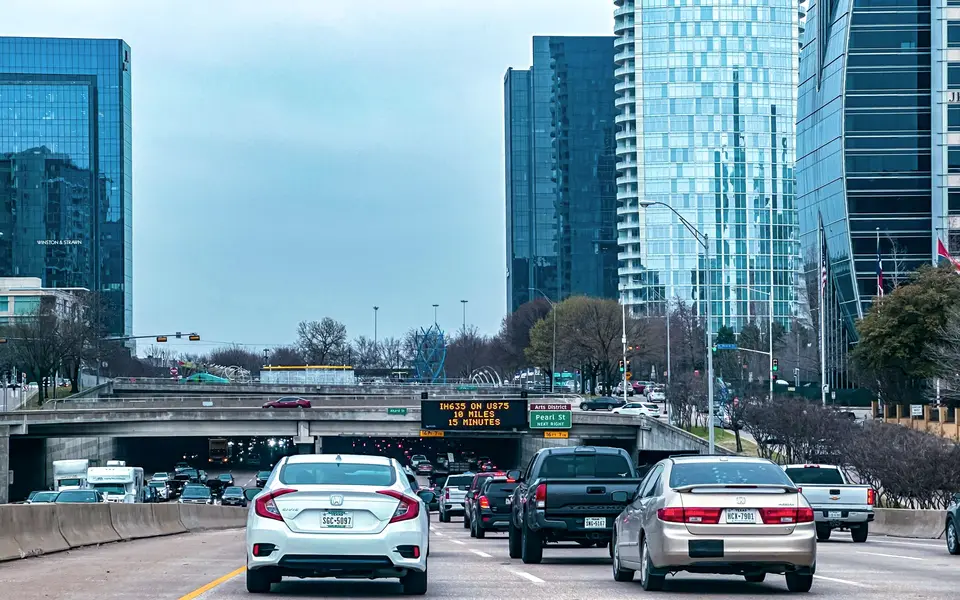
North Texas sees most of these at once: spring hailstorms across Denton, Collin and Dallas counties, and heavy commuting on I-35E, US-75, the Bush Turnpike and 121. When a company's claims in your area rise, the rate for your ZIP code can follow, even though you never filed one.
The two kinds of reasons a renewal goes up
| Reason | Who it affects | Can you change it? |
|---|---|---|
| The company filed higher rates | Everyone in a group, such as a ZIP code, vehicle type or coverage | Not directly. You can compare other companies. |
| Costs of parts, repairs and medical care rose | All drivers, at most companies | No. |
| Storm and crash losses in your area rose | Drivers who keep a car in that area | No, unless you move. |
| Your address, car, drivers, mileage or use changed | Only you | Sometimes. Make sure the details are correct. |
| Your credit-based insurance score changed | Only you | Yes, over time. You can ask for a re-rate. |
| A discount ended | Only you | Often. Ask what it takes to get it back. |
What this means for you: the first three rows cannot be argued with, only shopped. The last three are worth a phone call, because they are sometimes wrong and often fixable.
What can change about me without a claim or a ticket?
More than most people expect. OPIC lists these personal factors that can move a premium even when you have filed nothing:
- A new or different vehicle, or a new driver on the policy
- Moving, even a few miles, because rates can differ by ZIP code
- A change in age for you or the car
- A change in marital status
- A change in your credit score
- A lapse in insurance
- The loss of a discount you had before
TDI's own list of auto rating factors also includes how much you drive, your occupation and the cost to replace your vehicle.
A few of these catch drivers off guard. A teenager who gets a license changes the household's price, which is covered in our guide to adding a teen driver in Texas. A gap in coverage, even a short one, can cost you a prior-insurance discount, as explained in what happens when your car insurance lapses. And a ticket you had almost forgotten can show up at a later renewal, which we cover in whether a speeding ticket raises your insurance.
Lost discounts are the quiet ones. A new-customer discount may end, or a multi-policy discount disappears when your home or renters policy moves elsewhere. Neither involves a claim, and both show up as a higher bill.
Can my credit affect my car insurance even if I pay the premium on time?
Yes. TDI says most insurance companies use your credit history to help decide whether to sell you a policy and what it will cost. They look at things such as how many accounts you have open, how much you owe compared with your available credit, past-due payments and how often you apply for new credit. Paying your insurance bill on time is not the same thing.
Texas law puts limits on this, in Chapter 559 of the Insurance Code:
- A company may not deny, cancel or non-renew a personal policy solely because of credit information.
- A company that uses credit scoring must review and update an insured's credit report at least every 36 months, then reassess the rating and adjust the premium. This rule was added by a 2025 law.
- At renewal, you or your agent can ask the company to re-underwrite and re-rate the policy using a current credit report or insurance score, once in each 12-month period.
- If your credit was directly hurt by a catastrophic illness or injury, the death of a spouse, child or parent, a temporary job loss, divorce or identity theft, you can ask in writing for a reasonable exception.
TDI adds that a company must tell you within 30 days if it charges you more because of your credit report. The full picture is in how your credit score affects car insurance in Texas.
What is my insurance company not allowed to hold against me?
What Texas rules say about common worries
| Your worry | What the rule says | Source |
|---|---|---|
| I called to ask whether something was covered | A rating plan may not raise your premium solely because of an inquiry | Insurance Code 1953.051 |
| I filed a claim and it was denied or not paid | A company cannot charge more for a claim it did not pay | TDI; Insurance Code 1953.051 |
| I had a hail or flood claim | Weather claims cannot be the reason for non-renewal | TDI auto insurance guide |
| I hit a deer | The company cannot drop you for it, but it could raise your rate at renewal | TDI auto insurance FAQ |
| My credit dropped | Credit alone cannot be the reason to deny, cancel or non-renew | Insurance Code 559.052 |
| I turned a certain age | A company may not refuse to renew solely because of age | Insurance Code 551.106 |
What this means for you: these rules protect you from being dropped or surcharged for specific reasons. They do not cap a general rate increase that applies to everyone in your group.
Two notice rules are worth knowing. A company that decides not to renew your policy must mail notice at least 60 days before it expires. If it reduces coverage at renewal, it must tell you in plain language at least 30 days before the renewal date. Read everything that arrives with your renewal, not only the price.
How do I find out which reason applies to me?
Work through it in this order.
- Put the old and new declarations pages side by side. Check the drivers, vehicles, address, mileage, coverages, limits and deductibles. An error here is the easiest fix.
- Compare the discount lines and note any that disappeared.
- Call the company or your agent and ask: “Which rating factors changed on my policy since last term?” TDI does not have this information. Your company does.
- Ask whether the company filed a general rate change that applies to your policy.
- Ask whether credit was used, and if so, request a re-rate with a current report.
- Check your claims history report. Most companies use a database called CLUE, and TDI notes you can get a free copy each year from LexisNexis.
- Get comparison quotes for the same limits and deductibles.
A worked example
This is an illustration with round numbers, not a quote.
Say your six-month premium was $900. The company files a rate change that adds 10 percent for your vehicle type and ZIP code. That alone brings the premium to $990. At the same renewal, a $60 new-customer discount ends, and your premium becomes $1,050.
You had no claims, and your bill rose by $150: $90 from a rate change you cannot influence at this company, and $60 from a discount that expired. Knowing the split tells you what to do next.
Should I cut coverage to bring the price back down?
Be careful here. Stripping the policy is the fastest way to lower a bill and the way people end up underinsured after a crash.
Texas requires liability limits of at least $30,000 per injured person, $60,000 per accident and $25,000 for property damage, and for many drivers that minimum is already thin. See how much car insurance you really need in Texas.
There are safer levers: the deductible, coverage that no longer fits an older car, missed discounts and a price comparison. Each one is covered in how to lower your car insurance without gutting your coverage.
If your home insurance rose in the same year, the causes overlap. See why homeowners insurance is so expensive in Texas.
When is switching companies the right answer?
When the increase comes from the company's rate and not from you. Companies use different formulas, so the same driver can get different prices. TDI recommends shopping at least every three years.
Compare the same limits, deductibles and drivers, and do not cancel the old policy until the new one is in force. The steps are in how to switch car insurance companies without a gap.
If your own details changed, a new company will see the same facts. Then the better move is to correct what is wrong, ask about discounts and review each line of your auto insurance.
How Assured Insurance Group helps
Assured Insurance Group helps drivers in Flower Mound, Plano, Garland and across Dallas–Fort Worth with auto insurance, along with home and personal, commercial and life insurance. Bring your old and new declarations pages to our Flower Mound office, or send them to [email protected], and we will walk through your current policy and your options with you, line by line. You can also call 214-222-5234 or request a quote.
Questions people ask next
Does the Texas Department of Insurance approve my rate increase?
Not in advance. TDI does not set rates or premiums. A company sends TDI a rate filing and may use the new rates the same day or pick a later date. TDI actuaries review the supporting analysis and can ask for more information to confirm the change is supported and follows state law.
Can my insurer raise my rate because of an accident that was not my fault?
Texas law limits what a company can do with claims that were not paid and with simple inquiries, and it restricts non-renewal for accidents that were not reasonably your fault. How a not-at-fault accident is rated depends on the company’s filed rating plan. Ask your company in writing whether any accident on your record is affecting your renewal price.
Will a hail or flood claim on my car raise my premium?
TDI says a company cannot refuse to renew your auto policy because of weather-related claims. Whether a comprehensive claim changes your price at renewal depends on the company’s rating plan, and you can lose a claim-free discount. Ask before you file if the repair cost is close to your deductible.
How often can a Texas insurance company raise rates?
TDI says Texas law does not generally limit how often a company can file new rates. Each filing must include an analysis that supports the change. Your own price usually changes at renewal, so read each renewal offer when it arrives and compare it with the last one.
How do I find out exactly why my premium went up?
Call your company or agent and ask which rating factors changed since the last term and by how much. TDI does not have information about your policy, so the company is the source. Compare the old and new declarations pages line by line, and ask whether every discount you had is still applied.
Is it worth switching companies after an increase?
It is worth comparing. TDI suggests shopping at least every three years because companies charge different rates for the same driver. Compare the same limits and deductibles, check the company’s complaint record with TDI, and keep your current policy in force until the new one has started.
Sources and further reading
- Texas Department of Insurance: How are your auto and homeowners insurance costs calculated?
- Texas Department of Insurance: Will my premium go up if I file a claim?
- Office of Public Insurance Counsel: Why are Texas insurance rates increasing?
- Texas Department of Insurance: Auto insurance guide
- Texas Insurance Code, Chapter 559: Credit scoring and credit information
- Texas Insurance Code, Chapter 551: Cancellation and nonrenewal
General information for Texas readers, current as of October 2026. It is not legal, tax or insurance advice. Your coverage depends on the wording of your own policy.
More auto insurance guides
- Adding a Teen Driver to Your Car Insurance in Texas: What Parents Should Know
- What to Do After a Car Accident in Texas: Steps, Reports and Your Claim
- Hail Damage to Your Car in North Texas: How the Insurance Claim Works
- Comprehensive vs. Collision Coverage: What Each One Pays For
- How to Choose a Car Insurance Deductible You Can Live With
- Do You Need Gap Insurance on a Financed or Leased Car in Texas?