Texas · Auto insurance
Motorcycle Insurance in Texas: What Is Required and What Riders Add
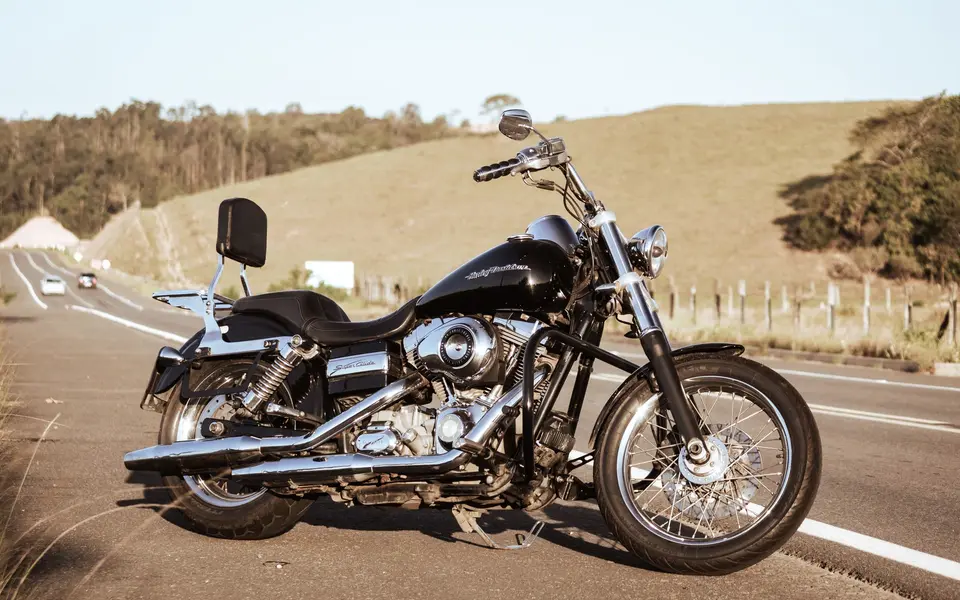
Texas treats a motorcycle like a car for insurance: 30/60/25 liability is required. That minimum pays other people only, so here is what riders add to protect themselves and the bike.

In short
Texas requires motorcycle riders to carry the same minimum liability insurance as car drivers: $30,000 per injured person, $60,000 per accident and $25,000 for property damage. Mopeds need it too. Liability pays other people, not you or your bike, so most riders look at collision, comprehensive, uninsured motorist and custom parts coverage. Riders 21 and older may ride without a helmet only with a safety course or health insurance.
- Texas requires 30/60/25 liability insurance on motorcycles, the same minimum as for cars.
- Mopeds and motor-driven cycles need the same liability coverage; off-road vehicles that cannot use public roads do not.
- Liability pays for injuries and damage you cause to others. It does not pay for your injuries or your motorcycle.
- Riders usually consider collision, comprehensive, uninsured motorist, guest passenger and custom parts coverage.
- A rider 21 or older may skip the helmet only after a safety course or with health insurance that covers motorcycle injuries.
In this article
- Is motorcycle insurance required in Texas?
- What does the 30/60/25 minimum pay for on a motorcycle?
- What coverages do Texas riders add to the minimum?
- Does your helmet choice have anything to do with insurance?
- What else does Texas require before you ride?
- What happens if you ride without insurance?
- How does the coverage play out in a real crash? A worked example
- What affects the price of motorcycle insurance?
You bought a motorcycle, or you are about to, and you want to know what Texas makes you carry before you ride it home. The answer is the same liability insurance required on a car, 30/60/25. That minimum protects other people from you. It does nothing for your own injuries or your bike, which is why the more useful question is what to add.
Is motorcycle insurance required in Texas?
Yes. The Texas Department of Insurance (TDI) says all drivers, motorcyclists included, must be able to prove financial responsibility for the accidents they cause. Motorcycles are treated like cars for registration, titling and insurance.
The minimum liability limits are the same as for a car:
- $30,000 for each injured person
- $60,000 per accident for all injured people
- $25,000 per accident for property damage
Mopeds and motor-driven cycles need the same minimum coverage, TDI says, even with their smaller engines and lower speeds. Off-road vehicles such as dirt bikes, all-terrain vehicles and mini-bikes do not need liability insurance, because they are not allowed on public roads.
For the full story of what those three numbers mean, see what car insurance is required in Texas. The rules there apply to your bike as well.
What does the 30/60/25 minimum pay for on a motorcycle?
Liability coverage pays for bodily injury and property damage you cause to other people. The Insurance Information Institute puts the limit of it in one line: liability does not cover your own injuries or your motorcycle.
What minimum liability pays after a crash you cause
| What was damaged or who was hurt | Does 30/60/25 liability pay? | Up to |
|---|---|---|
| The other driver’s injuries | Yes | $30,000 per person |
| Everyone hurt in the other vehicle, combined | Yes | $60,000 per accident |
| The other vehicle or other property | Yes | $25,000 per accident |
| Your own medical bills | No | Not covered by liability |
| Your motorcycle, helmet and gear | No | Not covered by liability |
What this means for you: a liability-only policy makes you legal, but after a crash you caused it leaves you with your own hospital bills and a bike you pay to fix yourself. Decide on purpose whether that is a risk you can carry.
There is also the question of whether the minimum is enough for the damage you could do. A $25,000 property limit does not go far against a newer pickup or SUV. The reasoning in how much car insurance you really need in Texas applies to riders too.
What coverages do Texas riders add to the minimum?
Everything beyond liability is usually optional unless a lender requires it. These are the coverages the Insurance Information Institute describes for motorcycles.
Optional motorcycle coverages and what each one is for
| Coverage | What it pays for | Worth a close look if |
|---|---|---|
| Collision | Damage to your bike from a crash, up to its value, minus your deductible | You could not replace the bike out of pocket, or you have a loan |
| Comprehensive | Theft, fire, vandalism, hail and other non-collision losses, minus your deductible | You park outside or the bike is a theft target |
| Uninsured/underinsured motorist | Your injuries, and in some cases your property, when the at-fault driver has no insurance or too little | Always, because a rider has little physical protection |
| Guest passenger liability | Injuries to a passenger on your bike | You ever carry a passenger |
| Custom parts and accessories | Add-ons beyond factory parts, such as chrome, custom paint or a sidecar | You have changed or added anything |
What this means for you: match the coverage to how you actually ride. A commuter bike parked outdoors in Garland needs comprehensive for hail and theft. A weekend bike with expensive custom work needs the accessories limit checked before anything else.
A few points on each.
Collision and comprehensive. These are the two coverages that pay for your own bike. If the difference between them is fuzzy, read comprehensive vs. collision coverage. Both come with a deductible, and how to choose a deductible you can live with explains the tradeoff. If you financed the bike, expect your lender to require both.
Uninsured and underinsured motorist. This coverage pays you when the driver who hit you cannot. It typically covers medical treatment and lost wages. For a rider, the case for it is stronger than for someone inside a car. See is uninsured motorist coverage worth it in Texas.
Custom parts. Many policies cover only factory-standard parts or cap what they pay for add-ons. If you have added saddlebags, a custom seat, upgraded exhaust or paint, ask what the limit is and keep the receipts.
Lay-up or seasonal policies. Some companies in northern states offer a policy that suspends everything except comprehensive in winter. North Texas winters leave plenty of riding days, and hail does not check the calendar, so think hard before pausing coverage on a bike that sits in a driveway.
Does your helmet choice have anything to do with insurance?
In Texas it does. Section 661.003 of the Transportation Code requires riders and passengers to wear a helmet that meets state safety standards. There is one exception.
A rider who is at least 21 may ride without a helmet if they have done one of two things:
- completed a motorcycle operator training and safety course, or
- have health insurance that covers medical benefits for injuries from a motorcycle crash.
Riding without a helmet when you do not qualify is a misdemeanor with a fine of $10 to $50. An officer may not stop you only to check whether you meet the exception. The law also directs TDI to set a standard proof of health insurance for riders who use this option.
If you rely on the health insurance exception, read your health plan to confirm it does not exclude motorcycle injuries. Our insurance glossary explains deductibles, limits and exclusions if you want a refresher first.
What else does Texas require before you ride?
Insurance is one of three things you need.
- A Class M driver license. The Department of Public Safety (DPS) requires a motorcycle safety course approved by the Texas Department of Licensing and Regulation. The completion certificate is valid for 24 months, and completing the course lets DPS waive the knowledge test.
- Registration. The Texas Department of Motor Vehicles lists a base registration fee of $30 for motorcycles and mopeds, plus county fees. You need proof of current liability insurance to register or renew.
- Proof of insurance with you when you ride. Texas requires drivers to be able to show proof that they can pay for the accidents they cause, so carry it on every ride.
New to the state with a bike on the trailer? Adults transferring a valid, unrestricted motorcycle license from another state may have the skills test waived. The rest of the move is covered in moving to Texas: when and how to switch your car insurance.
What happens if you ride without insurance?
The same thing that happens in a car. Under Section 601.191 of the Transportation Code, a first conviction for operating a motor vehicle without the required liability insurance carries a fine of $175 to $350. A later conviction carries $350 to $1,000.
The fine is the small part. If you cause a crash with no coverage, you owe the other person’s medical bills and repairs yourself. Our article on what happens if you drive without insurance in Texas covers the license and registration consequences in detail.
How does the coverage play out in a real crash? A worked example
This is an illustration with round numbers, not a quote or a prediction.
Chris is riding on FM 2499 in Flower Mound and rear-ends an SUV at a light. The crash is his fault.
- The SUV driver’s medical bills come to $45,000.
- The SUV needs $32,000 in repairs.
- Chris’s motorcycle, worth $9,000, is a total loss.
- Chris has $20,000 in medical bills of his own.
With minimum 30/60/25 liability only. His policy pays $30,000 toward the driver’s injuries and $25,000 toward the SUV. Chris is personally responsible for the remaining $15,000 in medical bills and $7,000 in repairs, a total of $22,000. He gets nothing for his bike. His own medical bills go to his health insurance, if he has it.
With 100/300/100 liability, plus collision with a $500 deductible. His liability coverage pays the full $45,000 and $32,000, because both are inside his limits. Collision pays $8,500 for the bike, which is its $9,000 value minus the $500 deductible. His own medical bills still depend on his health insurance or any medical coverage he added.
The crash was identical. What Chris owes afterward is $22,000 plus a lost motorcycle in one case and a $500 deductible in the other. Actual results always depend on the policy wording, so check your declarations page.
What affects the price of motorcycle insurance?
No honest article can tell you what you will pay, because the price is built from your details. The Insurance Information Institute lists these factors:
- your age, driving record and where you live
- the type of bike, such as sport, cruiser or custom
- the age of the motorcycle
- how many miles you ride in a year
- where the bike is stored
It also lists discounts that companies commonly offer, including for completing a rider training course, insuring more than one bike, having other policies with the same company, and being an experienced rider. Offers vary by company. Ask which ones apply to you, and ask what the policy would cost with and without each optional coverage so you can see what you are paying for.
A clean record helps on a bike just as it does in a car. If you have a recent citation, see does a speeding ticket raise your car insurance in Texas.
A checklist before you buy
- Confirm the liability limits. Is the minimum enough for what you could damage?
- Decide on collision and comprehensive, and pick deductibles you could pay tomorrow.
- Ask for uninsured/underinsured motorist coverage and its limit.
- Ask whether a passenger is covered.
- List every custom part and ask for the accessories limit.
- Ask what happens to coverage if someone else rides your bike.
- Get the proof-of-insurance card before you pick up the bike.
How Assured Insurance Group helps
Assured Insurance Group helps riders across Dallas–Fort Worth look at coverage for a motorcycle alongside their auto insurance. We will walk through your current policy and your options with you, including what liability-only leaves out. If you own a home, we can also talk through how umbrella insurance works on top of your vehicle and home insurance liability limits. Visit our Flower Mound office, call 214-222-5234, or request a quote for your bike and your other vehicles.
Questions people ask next
Do I need insurance on a moped or scooter in Texas?
Yes, if it is a moped or motor-driven cycle used on public roads. The Texas Department of Insurance says these need the same minimum liability insurance as motorcycles, even though they have smaller engines and lower speeds. All-terrain vehicles, dirt bikes, mini-bikes and golf carts are treated differently because they are not allowed on public roads.
Does my car insurance cover my motorcycle?
Do not assume it does. Texas treats a motorcycle like a car for registration, titling and insurance, which means the motorcycle itself needs liability coverage and you need proof of it. Ask your insurance company whether the bike must be on its own policy and whether insuring both with one company changes the price.
Can I ride without a helmet in Texas?
Only if you are at least 21 and have either completed a motorcycle operator training and safety course or have health insurance that covers injuries from a motorcycle crash. Everyone under 21 must wear a helmet. Riding without one when you do not qualify is a misdemeanor with a fine of $10 to $50.
Does motorcycle insurance cover my passenger?
Your liability coverage pays people you injure in other vehicles or on foot. A passenger on your own bike is a separate question. Guest passenger liability coverage is designed for that, and whether it is included or optional depends on the company and the policy. Ask before you carry anyone.
Is hail or theft covered on a motorcycle?
Only if you carry comprehensive coverage. Comprehensive pays for losses that are not collisions, such as theft, fire, vandalism and hail, up to the value of the bike minus your deductible. Liability-only coverage pays nothing for damage to your own motorcycle, whatever the cause.
What license do I need to ride a motorcycle in Texas?
A Class M driver license. The Texas Department of Public Safety requires a motorcycle safety course approved by the Texas Department of Licensing and Regulation, and the completion certificate is valid for 24 months. Adults transferring a valid, unrestricted motorcycle license from another state may have the skills test waived.
Sources and further reading
- Texas Department of Insurance: Do I need insurance for a motorcycle or moped?
- Texas Department of Public Safety: Motorcycle license
- Texas Transportation Code, Sec. 661.003 (protective headgear)
- Texas Transportation Code, Sec. 601.191 (operating without liability insurance)
- Insurance Information Institute: Motorcycle insurance
- Texas Department of Motor Vehicles: Register your vehicle
General information for Texas readers, current as of August 2026. It is not legal, tax or insurance advice. Your coverage depends on the wording of your own policy.
More auto insurance guides
- Non-Owner Car Insurance in Texas: Who Needs It and What It Covers
- What Happens If Your Car Insurance Lapses in Texas?
- Cracked Windshield in Texas: Does Insurance Cover It and Should You File?
- Is a Flooded Car Covered by Insurance in Texas?
- How to Switch Car Insurance Companies Without a Gap in Coverage
- How Much Car Insurance Do You Really Need in Texas?