Texas · Commercial insurance
Commercial Auto Insurance in Texas: When a Personal Policy Is Not Enough
How to tell whether the vehicle you use for work belongs on a commercial policy, what Texas and federal rules require, and how to choose limits that match the risk.

In short
You need commercial auto insurance in Texas when a vehicle is owned by a business, used mainly for work, or driven for paid deliveries or hauling. Most personal auto policies do not cover accidents while you drive for business or deliver for a fee. Every Texas vehicle needs at least 30/60/25 liability coverage, and trucks over 26,000 pounds that operate as motor carriers need at least $500,000.
- Most personal auto policies do not cover driving for business or delivering for a fee, according to the Texas Department of Insurance.
- A vehicle titled to the business needs a commercial policy.
- Texas requires at least 30/60/25 liability on every vehicle, personal or commercial.
- Texas motor carriers with vehicles over 26,000 pounds must carry at least $500,000 in liability coverage.
- Employees driving their own cars for work create a gap that hired and non-owned auto coverage is designed to fill.
In this article
- When does a personal auto policy stop covering you?
- Which vehicles and drivers need a commercial policy?
- What does Texas require on a business vehicle?
- What does a commercial auto policy cover?
- How much liability coverage should a business vehicle carry?
- What drives the price of commercial auto insurance?
- What should you check before you buy or renew?
Service: Commercial Insurance in Flower Mound, Plano and Garland
If you use a car, van or truck to earn money, your personal auto policy may not be there when you need it. Most personal policies are written for personal driving, and a vehicle that is owned by a business or used mainly for work belongs on a commercial auto policy.
When does a personal auto policy stop covering you?
Start with what the Texas Department of Insurance (TDI) tells consumers. In its auto insurance guide, TDI says most policies do not cover accidents while you are driving for a ride-hailing service or delivering food or other items for a fee, and it lists driving for business among the things most policies do not cover.
The Insurance Information Institute draws the line in three places:
- Ownership. A personal auto policy will not provide coverage for a vehicle owned by a business.
- Primary use. If a vehicle is used primarily in business, there is likely no coverage under a personal policy.
- Who is protected. Even when a personal policy does respond, the insurance company defends and pays for you personally, up to your limits. It does not protect your business, which can be sued separately after a serious crash.
Some personal policies allow limited business use, sometimes for an added premium. Others exclude it. That is why TDI's advice is simple: tell your insurance company if you drive for business. An undisclosed business use could lead to a denied claim, leaving you to pay.
If you already know your personal auto insurance well, think of commercial auto as the same idea with higher stakes: more miles, heavier vehicles, employees behind the wheel and a business that can be named in a lawsuit.
Which vehicles and drivers need a commercial policy?
Use this table as a first pass. Your own policy wording decides the real answer, so check your declarations page and ask before you assume.
Common situations and where the coverage usually belongs
| Situation | Where it usually belongs |
|---|---|
| Vehicle titled or registered to your LLC or corporation | Commercial auto |
| Your own pickup, used mostly to haul tools and materials to job sites | Commercial auto |
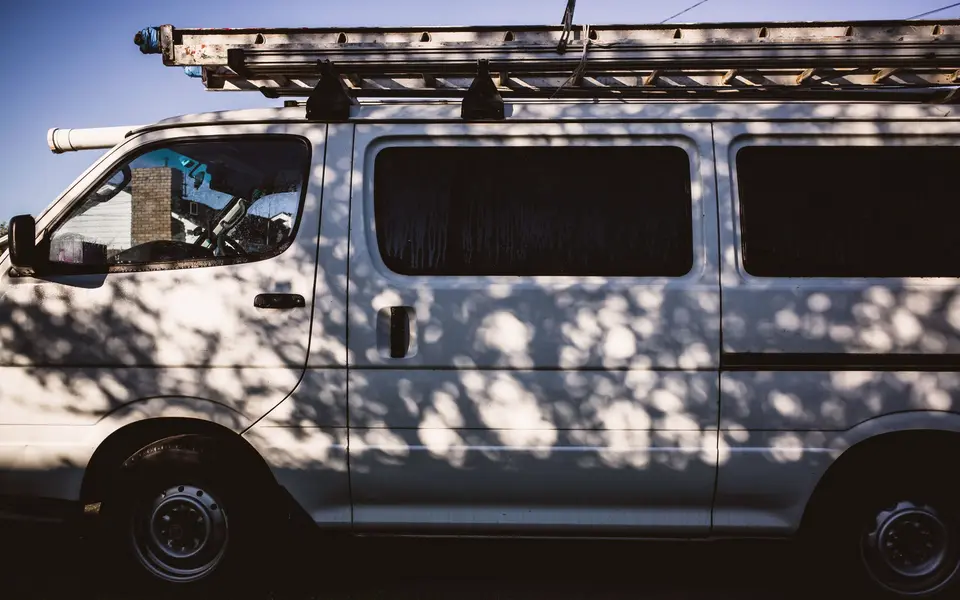
| Van with permanent racks, signage or equipment used for the business | Commercial auto |
| Your own car, used for occasional client visits or bank runs | Often personal, with business use disclosed |
| Your own car, used for paid food or package delivery | A delivery endorsement on a personal policy, or commercial auto |
| Driving passengers for Uber or Lyft | A rideshare endorsement or policy |
| Employees running errands in their own cars | Hired and non-owned auto coverage for the business |
| Truck over 26,000 pounds, or hauling for hire | Commercial auto with motor carrier filings |
What this means for you: ownership and main use decide most cases. If the business owns it, or the business could not operate without it, plan on a commercial policy.
Two of these rows have their own guides. See rideshare insurance for Uber and Lyft drivers in Texas and hired and non-owned auto insurance when employees drive their own cars. If you work from home and make deliveries, what a homeowners policy does not cover for a home business is worth reading too.
What does Texas require on a business vehicle?
The basic rule is the same for every vehicle on a Texas road. TDI explains that state law requires at least $30,000 of coverage for injuries per person, up to $60,000 per accident, and $25,000 for property damage. This is called 30/60/25 coverage, and our article on Texas minimum car insurance requirements explains each number.
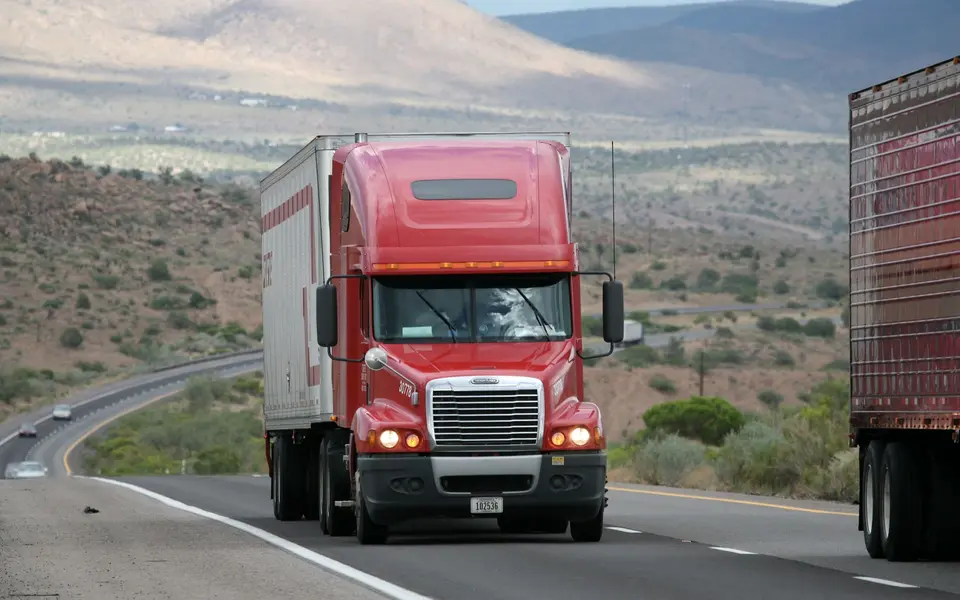
Heavier and specialized vehicles have higher minimums. The Texas Department of Motor Vehicles (TxDMV) requires intrastate motor carriers to register and get a TxDMV Number if they operate a commercial vehicle or combination over 26,000 pounds, transport hazardous materials that require placarding, operate a farm vehicle rated at 48,000 pounds or more, carry more than 15 people including the driver, operate a commercial school bus, or move household goods for pay at any vehicle weight.
Minimum liability limits that apply to business vehicles
| Vehicle or operation | Minimum liability | Set by |
|---|---|---|
| Any vehicle on Texas roads | 30/60/25 | Texas law |
| Household goods movers under 26,000 pounds | $300,000 | TxDMV |
| Private or for-hire carriers over 26,000 pounds | $500,000 | TxDMV |
| Buses designed for 16 to 26 people, including the driver | $500,000 | TxDMV |
| Buses designed for 27 or more people | $5,000,000 | TxDMV |
| Oil and certain other hazardous materials | $1,000,000 | TxDMV |
| For-hire interstate carriers of nonhazardous property, vehicles rated 10,001 pounds or more | $750,000 | Federal rules (49 CFR Part 387) |
What this means for you: a plumber's van and a landscaper's pickup fall under the basic 30/60/25 rule by law. A dump truck, a moving truck or any truck that crosses state lines for hire falls under much higher limits, with proof filed by the insurance company.
That proof matters. For a TxDMV Number, your insurance company files a Form E electronically to show liability coverage. You are responsible for keeping that insurance record active, even though the insurer submits it. For the full picture on heavy trucks, see trucking insurance limits and filings in Texas.
What does a commercial auto policy cover?
The coverages will look familiar if you have read a personal policy. The differences are in how the limits work and who is insured.
Liability. This pays for injuries and property damage your business is legally obligated to pay after a crash involving a covered vehicle, and it includes your legal defense. Personal policies use split limits such as 30/60/25. Commercial policies commonly use a combined single limit: one amount per accident that applies to injuries and property damage together.
Uninsured and underinsured motorist, and medical coverage. Ask how these are handled on the quote. On Texas auto policies, TDI explains that insurers must offer uninsured/underinsured motorist coverage and personal injury protection, and that you must decline them in writing if you do not want them. Do not sign a rejection form without knowing what you are giving up. Our guide on whether uninsured motorist coverage is worth it in Texas applies to work vehicles as well.
Physical damage. This is coverage for your own vehicle:
- Collision pays when the vehicle hits an object or overturns.
- Comprehensive pays for other causes such as fire, theft, flood, glass breakage and falling objects. In North Texas, this is the coverage that answers a hail claim.
The Insurance Information Institute notes that insurers pay the lesser of the vehicle's actual cash value or the cost to repair or replace it. Actual cash value accounts for depreciation. You can find that term and others in our insurance glossary.
Which vehicles count. A commercial policy can be set up to cover only the vehicles the business owns, vehicles it owns, hires or leases, or any vehicle used in the business. The Insurance Information Institute says most businesses should choose the broadest option, because it covers the business's liability when an owner or employee drives a personal vehicle on company business.
One more point: a business owner's policy does not cover vehicles. Commercial auto is always its own policy or its own part of a package.
How much liability coverage should a business vehicle carry?
Think about what a work vehicle can do. A loaded van that rear-ends a line of stopped cars on I-35E or the Bush Turnpike can injure several people at once. Under a 30/60/25 policy, all of the injured people together share $60,000, and all of the damaged vehicles share $25,000.
The Insurance Information Institute reports that many insurers recommend a business auto liability limit of $1,000,000, with $500,000 as the minimum, and that moving up from the minimum adds relatively little premium for the added protection. Your contracts may make the decision for you. Many commercial clients and general contractors require $1,000,000 before your trucks can enter the job site.
If you need limits above the auto policy, a business umbrella can sit over owned, hired and non-owned autos when it lists the auto policy as underlying coverage. See commercial umbrella vs. excess liability. A personal umbrella generally will not respond to a business vehicle claim.
A worked example
This example uses round numbers to show how limits work. It is not a quote or a prediction.
A Flower Mound HVAC company owns a service van. On the way to a call, the technician fails to stop in time and pushes one car into another. Three people are hurt. Their combined medical bills and lost wages come to $210,000, and the two cars have $55,000 in damage. Total: $265,000.
- With 30/60/25 limits: the policy pays up to $60,000 for all injuries and up to $25,000 for the cars, $85,000 in total. The remaining $180,000 is a claim against the business.
- With a $1,000,000 combined single limit: the full $265,000 falls within the limit. The company pays its deductible on its own van, if it carries collision, and keeps working.
What drives the price of commercial auto insurance?
These are the factors that move the premium:
- The type, size and value of each vehicle
- How the vehicles are used and how far they travel
- Who drives, and their driving records
- The limits and deductibles you choose
- Your claims history
- Where the vehicles are kept
TDI notes that insurers view business driving as riskier than personal driving, which is why delivery coverage and commercial policies cost more than personal use alone. For a wider view, read what drives the cost of business insurance.
The Insurance Information Institute also warns that an employer can be held liable for entrusting a vehicle to someone with a known poor driving record, so check records before you hand over the keys.
What should you check before you buy or renew?
Work through this list with your policy in hand.
- Check every title and registration. Any vehicle in the business name should be on a commercial policy.
- Describe the real use. Deliveries, hauling, towing a trailer, job-site travel and passenger transport all need to be disclosed.
- List every driver. Include family members and part-time help who drive company vehicles.
- Read your contracts. Note the auto liability limit your clients, landlords or general contractors require.
- Decide on physical damage vehicle by vehicle. Newer and financed vehicles usually need collision and comprehensive. An old trailer may not.
- Ask about employees' own cars and rentals. Confirm whether hired and non-owned auto coverage is included.
- Confirm filings. If you need a TxDMV Number or federal authority, make sure the insurance company will file the proof.
How Assured Insurance Group helps
Assured Insurance Group helps business owners in Flower Mound, Plano, Garland and across Dallas–Fort Worth with commercial insurance, including coverage for work vehicles, as well as auto, home and personal, and life insurance. We will walk through your current policy and your options with you, so you can see which vehicles and drivers are covered today and where the gaps are. You can visit our Plano office, email [email protected], or read more about the commercial insurance coverages we help with. To get started, request a quote or call 214-222-5234.
Questions people ask next
Does my personal auto policy cover driving to work?
Commuting to one regular workplace is normally treated as personal use. The gap opens when the driving is the work: deliveries, hauling tools and materials to job sites, carrying passengers for pay or visiting clients all day. The Texas Department of Insurance advises telling your insurance company about any business use so a claim is not denied later.
I deliver for an app in my own car. Do I need a commercial policy?
Not always. The Texas Department of Insurance suggests first asking whether you can add optional delivery coverage to your personal policy, which typically costs less than a commercial policy. Also ask the company you deliver for what its insurance covers, because gaps are common on the drive to a pickup and on the way home.
Is a pickup truck automatically a commercial vehicle?
No. What matters is who owns the truck and how it is used, not the body style. A pickup you own personally and drive for family use belongs on a personal policy. The same truck titled to your LLC, or used mainly to haul equipment to job sites, belongs on a commercial policy.
Does commercial auto cover the tools and cargo inside the vehicle?
Usually not. A commercial auto policy covers the vehicle and your liability to others. Tools, equipment and goods you carry are normally insured separately, through inland marine or cargo coverage. Ask your agent which policy would respond if the truck were stolen with a full load of tools inside.
Can I use my company vehicle for personal trips?
Generally yes, if the vehicle is listed on the commercial policy with the right coverage. A separate problem arises if you have a company car and no personal auto policy: you may have no coverage when you borrow or rent another car. A drive other car endorsement is designed to close that gap.
Does a commercial auto policy cover employees who drive?
A commercial policy is built to cover employees driving company vehicles with permission, but each insurance company has its own driver rules. Expect to list your drivers and have their driving records reviewed. Tell your agent when you hire a new driver so the policy matches who is actually behind the wheel.
Sources and further reading
- Texas Department of Insurance: Auto insurance guide
- Texas Department of Insurance: Delivering packages? What to know about auto insurance
- Texas Department of Motor Vehicles: TxDMV Number requirements and insurance minimums
- FMCSA Safety Planner: Financial responsibility for property carriers (49 CFR Part 387)
- Insurance Information Institute: Business vehicle insurance
General information for Texas readers, current as of November 2026. It is not legal, tax or insurance advice. Your coverage depends on the wording of your own policy.
More commercial insurance guides
- Professional Liability (E&O) Insurance: Who Needs It and What It Covers
- Cyber Liability Insurance for a Small Business: What It Pays For After a Breach
- Commercial Property Insurance: What It Covers for a Texas Business
- Business Interruption Insurance: How It Replaces Income After a Loss
- What Is a Certificate of Insurance (COI), and How Do You Get One?
- Contractor Insurance in Texas: What General Contractors and Trades Are Asked to Carry