Texas · Home insurance
Does Homeowners Insurance Cover Water Damage, Burst Pipes and Slab Leaks in Texas?
Whether a water claim is paid comes down to two questions: where the water came from and how long it was leaking. This guide sorts the common situations and shows what to do in the first hour.

In short
Most Texas homeowners policies cover water damage that is sudden and accidental, such as a burst pipe, an overflowing toilet or a broken washing machine hose. They usually do not cover slow leaks and seepage, flooding from outside, or sewer backup unless you added that coverage. With a slab leak, the water damage may be covered while the pipe repair itself is typically your cost.
- Sudden and accidental water damage is covered on most home and renters policies. Gradual leaks and seepage usually are not.
- Flood water from outside is never part of a standard homeowners policy. It needs separate flood insurance.
- Sewer or drain backup and foundation or slab damage are commonly add-on coverages in Texas.
- Mold on an item damaged by a covered leak is generally covered, but mold cleanup and testing often need added coverage.
- Report hidden water damage within days of finding it, and dry the area fast: mold can start growing within a day.
In this article
- What kind of water damage does a Texas homeowners policy cover?
- Where is the line between a sudden leak and a slow one?
- Are burst and frozen pipes covered?
- How does insurance handle a slab leak?
- What about sewer backup, flood and mold?
- What should you do in the first hour after you find water?
- Will a water claim affect your policy later?
- What should you check on your policy today?
Service: Home & Personal Insurance in Flower Mound, Plano and Garland
You came home to water across the kitchen floor, or your water bill doubled and a plumber says there is a leak under the slab. Most Texas homeowners policies pay for water damage that is sudden and accidental. They usually do not pay for slow leaks, for flood water from outside or for the broken pipe itself, so the source and the timing of the water decide your claim.
What kind of water damage does a Texas homeowners policy cover?
The Texas Department of Insurance (TDI) puts it simply: most homeowner and renter policies cover sudden and accidental water damage. Its examples are a burst pipe, a toilet overflow and a broken washer hose.
The other side of that rule matters just as much. Most policies do not cover damage from gradual leaks or seepage, and they do not cover floods. Those two exclusions account for most denied water claims.
How common sources of water are typically treated
| Where the water came from | Typical treatment | Notes |
|---|---|---|
| Burst supply pipe, failed water heater, broken washer hose | Covered | Sudden and accidental discharge |
| Toilet, tub or sink overflow | Covered | Sudden and accidental |
| Pipe that froze and burst | Covered on many policies | Conditions apply if you did not protect the pipes or the home was unoccupied |
| Rain through a roof opened by hail, wind or a fallen tree | Covered if you have wind and hail coverage | Your wind and hail deductible applies |
| Slow drip under a sink or behind a wall | Usually not covered | Continuous or repeated seepage exclusion |
| Roof leaking from age or poor upkeep | Not covered | Wear and tear |
| Sewer or drain backing up into the house | Only if you added the coverage | Common endorsement |
| Rising water, overflowing creek, storm runoff | Not covered | Needs a flood policy |
What this means for you: when you report a claim, describe what happened and when you found it, as accurately as you can. The adjuster is sorting your loss into one of these rows.
Your policy form also plays a part. Broader forms cover the building for everything that is not excluded, while more basic forms cover only a list of named causes, as shown in Texas policy types compared. For everything else a standard policy includes, see what homeowners insurance covers in Texas.
Where is the line between a sudden leak and a slow one?
Every company draws it in its own words, and the words are in your policy.
A TDI comparison of Texas homeowners policies found three common versions. Some policies exclude leakage or seepage that goes on for 14 or more days. Some exclude leakage over a period of weeks, months or years. Others exclude leakage over a period of time that results in deterioration, corrosion, rust or rot.
In practice the adjuster looks for signs of age: rot, rust, layered staining, long-established mold. A supply line that splits on Tuesday and soaks the hallway by evening is sudden. A shower pan that has wet the subfloor for a year is not.
Some companies sell coverage for continuous and repeated leakage or seepage as an add-on. If you own an older home with original plumbing, ask whether it is available.
A worked example: the same hose, two outcomes
These are round numbers for illustration, not a quote.
A home in Garland is insured for $300,000 with a 1% deductible, which is $3,000. While the family is at work, the supply hose on the washing machine splits and runs for six hours.
- Drying, flooring, baseboards, drywall and lower cabinets: $18,000
- Damaged rugs, furniture and stored items: $3,000
- Total covered damage: $21,000
- Minus the deductible: $3,000
- Paid by the policy in this example: $18,000
The new hose is the owner's cost.
Now change one fact. The same hose had a pinhole and dripped behind the machine for months, and the subfloor is rotted. Most policies would treat that as continuous seepage and pay nothing.
Are burst and frozen pipes covered?
A pipe that bursts without warning is the classic covered water claim. The policy generally pays to dry the house and to repair or replace floors, walls, cabinets and belongings, minus your deductible.
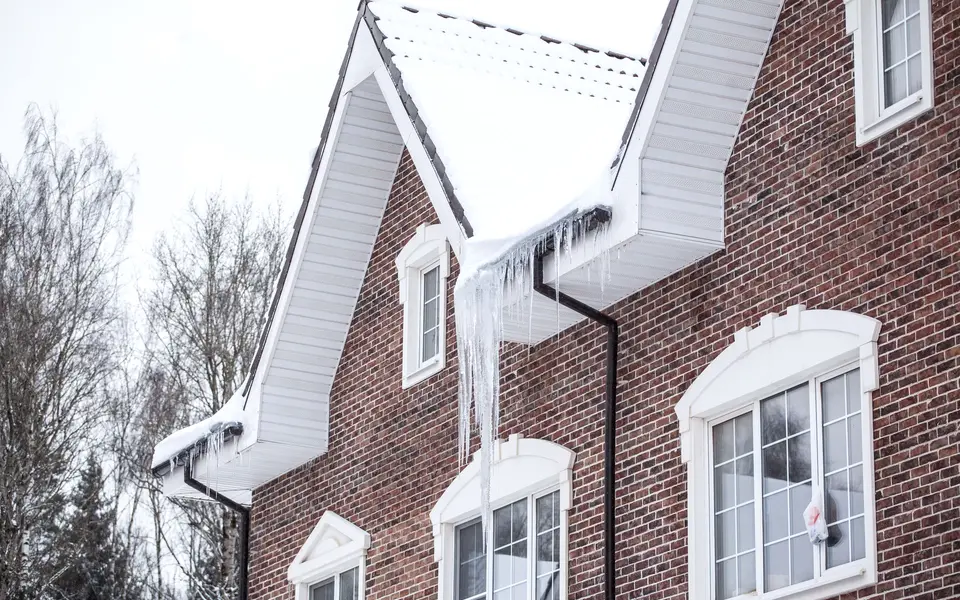
Freezing has conditions attached. TDI warns that home and renters policies might not pay for frozen pipe damage if you did not take steps to protect your pipes, such as keeping the heat on. Its policy comparison also lists freezing pipes while the house is unoccupied among common exclusions.
North Texas learned this in the February 2021 freeze, when pipes burst in homes across the region. If you leave town in winter, TDI's advice is to shut off the water at the main valve and leave the heat on. The full winter checklist and the claim details are in frozen and burst pipes in a Texas winter storm.
How does insurance handle a slab leak?
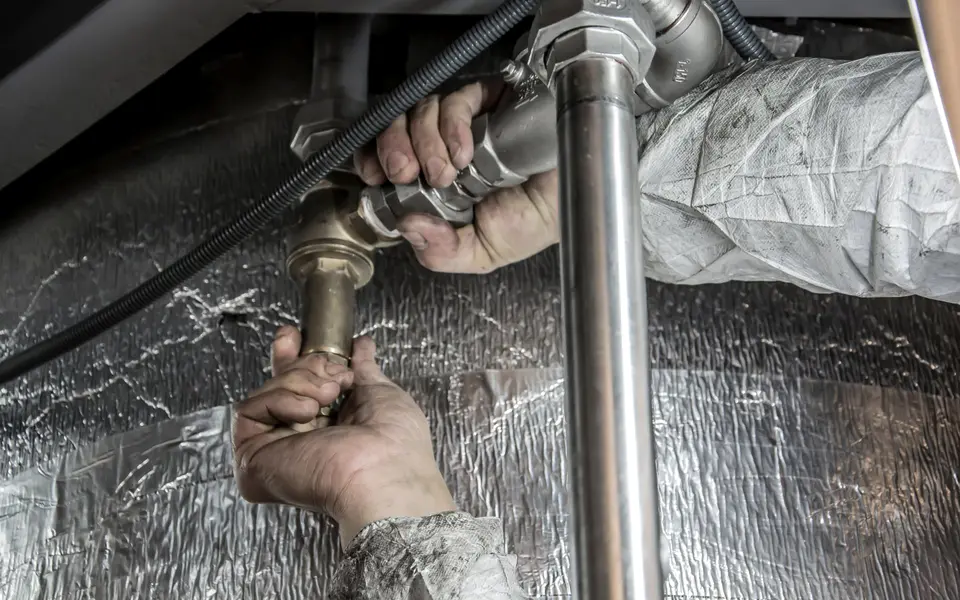
A slab leak is a leak in a water or drain line that runs under your concrete foundation. Most homes around Dallas–Fort Worth are built on slabs, so this is a common repair, and it produces a bill with several parts that insurance treats differently.
The parts of a slab leak bill and who typically pays
| Part of the bill | Typical treatment |
|---|---|
| Finding the leak | Varies by policy. Ask. |
| Breaking through the floor or tunneling to reach the pipe | Covered on some policies and endorsements when the water damage itself is covered |
| Repairing or rerouting the pipe | Usually your cost |
| Drying out, replacing flooring, baseboards, drywall and cabinets | Covered if the leak counts as sudden and accidental |
| Damage to the slab or foundation itself | Usually needs a foundation or slab endorsement |
What this means for you: a paid slab leak claim rarely covers the plumber's whole invoice. Ask your company to tell you in writing which lines it is paying and why.
The Office of Public Insurance Counsel lists foundation or slab damage from a plumbing, heating or air conditioning leak as an add-on coverage in Texas. If the leak has shifted your slab, read whether homeowners insurance covers foundation damage, which explains that endorsement and its limits.
What about sewer backup, flood and mold?
These three cause the most confusion, because all of them involve water and none of them is fully covered by a basic policy.
Sewer or drain backup. Water or sewage that comes up through a floor drain, tub or toilet is commonly excluded unless you add backup coverage. It is a single line on the list of endorsements and easy to overlook. Backup coverage is not flood insurance, and it does not apply to backup caused by a flash flood.
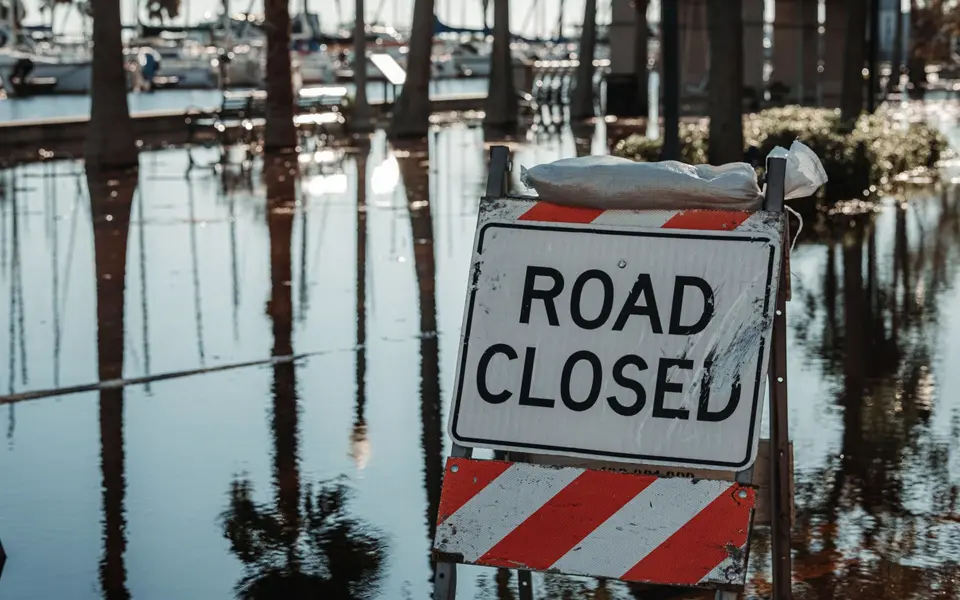
Flood. Water that rises from outside, whether from a creek, a street or runoff across your yard, is excluded on standard homeowners policies. Flood insurance is a separate policy, and it will not pay for a burst pipe either. The two policies do not overlap. See whether you need flood insurance in Texas outside a flood zone.
Mold. TDI explains that if mold develops on an item damaged by a covered water loss, it would be covered. Mold from a gradual leak or a flood is not. Most policies also leave out mold cleanup and testing after the damaged material is removed, though you may be able to add it. If you hire a mold professional, TDI says to confirm the state license, and you will need a certificate showing the mold was removed and the cause fixed.
An endorsement is a form that adds or changes coverage on your policy. Terms like this are defined in our insurance glossary.
What should you do in the first hour after you find water?
Speed protects both your house and your claim. TDI warns that mold can start growing within a day after a leak, and that a company may deny a claim if you fail to protect your property from further damage.
- Stop the water. Close the main shutoff valve, or the valve under the sink or behind the appliance.
- Stay safe. If water is near outlets or the electrical panel, turn off power to that area if you can do it safely.
- Take photos and video before you move or remove anything.
- Remove standing water and start drying with fans and towels. Pull up wet rugs and carpet.
- Move wet belongings to a dry room. Do not throw anything away until the adjuster has seen it.
- Call your insurance company and write down the claim number.
- Make temporary repairs only, and keep the receipts. Wait on permanent repairs until the company has inspected.
- Bring in a water cleanup company if you cannot dry the area yourself.
A room-by-room list of what you own makes the contents part of the claim far easier. You can build one with our guide to making a home inventory in one afternoon. Texas law also sets deadlines for the company to acknowledge, decide and pay, which are laid out in the hail roof claim, step by step.
Will a water claim affect your policy later?
It can. The Texas Consumer Bill of Rights sets these limits on how a company may use your claim history:
- A company cannot raise your premium based on non-weather claims unless you file two or more in a three-year period.
- A company cannot refuse to renew based on such claims unless you file two in three years, it warns you in writing after the second, and you then file a third.
- An appliance-related water damage claim cannot be used to raise your premium or refuse renewal if the damage was properly repaired and the repair was inspected and certified. That protection ends once three or more such claims have been filed and paid on the property, including claims by a prior owner.
- A claim that was filed but not paid cannot be used against you.
So weigh a small water claim against your deductible and your recent history. If you receive a non-renewal notice, see your rights when a Texas homeowners policy is non-renewed. If a claim is turned down and you disagree, start with what to do when a homeowners claim is denied.
What should you check on your policy today?
- The dollar amount of your deductible for water claims, on your declarations page.
- Whether sewer or drain backup coverage is listed, and its limit.
- Whether you have a foundation or slab endorsement.
- How your policy defines continuous or repeated seepage.
- Whether mold cleanup has a limit or is excluded.
Renters and condo owners have their own versions of these questions, covered in what renters insurance covers in Texas and condo insurance in Texas. If you run a shop or office, water damage there falls under your commercial insurance, not your home policy.
How Assured Insurance Group helps
Assured Insurance Group helps homeowners and renters in Flower Mound, Plano, Garland and across Dallas–Fort Worth with home and personal insurance. We will walk through your current policy with you, including backup, slab and mold coverage, and go over your options. You can visit our Garland office, email [email protected] or request a quote for homeowners insurance. You can also call us at 214-222-5234.
Questions people ask next
Does homeowners insurance pay to fix the broken pipe or appliance?
Usually not. A standard policy is meant to pay for the damage the water causes, such as ruined flooring, drywall and cabinets, not for repairing or replacing the pipe, water heater or hose that failed. Some policies and endorsements also pay to open a wall or floor to reach the leak. Check your policy wording for both points.
Is a roof leak covered by homeowners insurance in Texas?
It depends on what opened the roof. If a covered event such as hail, wind or a fallen tree damaged the roof and rain came in, most policies with wind and hail coverage pay for the roof and the interior damage, minus your deductible. If the roof leaked because it is old or poorly maintained, that is wear and tear and is usually excluded.
Does homeowners insurance cover mold after a leak?
The Texas Department of Insurance says that if mold develops on an item damaged by a covered, sudden water loss, it would be covered. Mold from a gradual leak or from flooding is not. Most policies also do not include mold cleanup and testing after the damaged material is removed, though you may be able to add that coverage.
Does homeowners insurance cover a leaking water heater?
If the tank fails suddenly and water runs through the house, most policies treat the resulting damage to floors, walls and belongings as sudden and accidental, minus your deductible. The water heater itself is usually your cost to replace. A heater that has dripped and rusted in its pan for months is a gradual leak, which most policies exclude.
Does renters insurance cover water damage?
Renters policies generally cover your belongings against sudden and accidental water damage, such as a burst pipe in your unit or the one above. They do not cover the building, which is the owner’s responsibility, and they do not cover flood. Renters can buy contents-only flood coverage through the National Flood Insurance Program.
How quickly do I have to report water damage?
Tell your insurance company as soon as possible. The Texas Department of Insurance notes that hidden water damage usually must be reported within days after you first see it. Waiting can turn a covered sudden leak into a dispute about seepage and mold, so call first and sort out the details afterward.
Sources and further reading
- Texas Department of Insurance: When are water damage and mold covered by insurance?
- Texas Department of Insurance: Texas homeowners policies (policy types and exclusions)
- Texas Department of Insurance: Home insurance guide
- Texas Department of Insurance: Consumer Bill of Rights for homeowners, dwelling and renters insurance
- Office of Public Insurance Counsel: Residential property insurance, the basics
- Texas Department of Insurance: Winter storms, tips for preparing your house and pipes
General information for Texas readers, current as of October 2026. It is not legal, tax or insurance advice. Your coverage depends on the wording of your own policy.
More home insurance guides
- How the Age of Your Roof Affects Homeowners Insurance in Texas
- Buying a Home in Texas: When to Get Homeowners Insurance Before Closing
- How Escrow Works With Homeowners Insurance, and What Happens When You Switch
- Renters Insurance in Texas: What It Covers and What It Does Not
- Is Renters Insurance Required in Texas? What Landlords Can Ask For
- Condo Insurance in Texas: What the HOA Policy Covers and What You Must Insure